
Go Out On A Limb
In 1963, Andy Williams recorded and released a song that was written by Edward Pola and George Wyle. The song was entitled “It’s the Most Wonderful Time Of The Year,” and it has become one of the most recognizable anthems of our culture. Even if you’ve never heard of any of the aforementioned names (which I hadn’t until I researched them for this blog lol), you’ve heard and hummed the tune.
But the chief contention of the song is a debatable proposition. I am unsure if Christmas is the most wonderful time of the year. More than a few would argue that that honor belongs to Summertime. During the summertime, days are longer, dresses are shorter, and the ice seems colder. During the summertime, blockbuster movies hit the theaters. During the summertime, airports get more crowded and supermarkets shelves get emptier. As the pre-Chris Rock slap Will Smith once rhapsodized with his compatriot DJ Jazzy Jeff, summertime is when “the temperature's about 88/Hop in the water plug just for old times sake/Break to your crib change your clothes once more/ Cause you're invited to a barbecue that's startin' at 4.”
One of my favorite aspects of summertime is that Jamba Juice adds the Watermelon Breeze back to its menu. LOL. It is by far my favorite smoothie. It is only available during the summer, so I really do over-indulge. I have been known to visit Jamba Juice several times a day to splurge on that delightful and delicious treat. To avoid the suspicion of their staff, I even vary the times and locations of my visits. Don’t judge me. LOL.
While waiting in line earlier this week for my third Watermelon Breeze of the day, I noticed a sign on the wall. The sign read: Go Out On A Limb. That’s Where The Fruit Is.” The message on that sign struck me, as it reenforced a message that I read in Proverbs 10:5, which says
He that gathereth in summer is a wise son: But he that sleepeth in harvest is a son that causeth shame.
Solomon suggests that contrary to what many believe and how many behave, summertime is not simply the time for enjoyment, rest and relaxation. Summer is the time to prepare. Summertime is the time to plan. Summertime is the time to get ready for winter. Summertime is when options should be explored. Summertime is when opportunities should be pursued. And Summertime is when risks should be taken.
I just don’t think Solomon is referring to the weather, or to the calendar. Solomon is advocating that we think seasonally. He would extend this argument in Ecclesiastes 3:1, where he reminds us that “to everything there is a season, a time and a purpose under heaven.” In Ecclesiastes 3:8, he says there is a time to plant, and a time to harvest.”
It wasn’t until I spent the summers in South Carolina with my Aunt Josephine that I understood that principle. Every day, we had to do homework in the mornings and shuck green beans in the afternoon. Shucking beans is the process of removing the beans from the pod. Then, Aunt Josephine would collect the shucked beans, put them in glass jars, and then store them in the freezer. During those summers, I learned that harvesting is as difficult as planting. No green bean is going to leap out of the ground, run into your basket or walk into your mouth. To harvest a vegetable takes work—which brings me back to the sign on that wall in that Jamba Juice store.
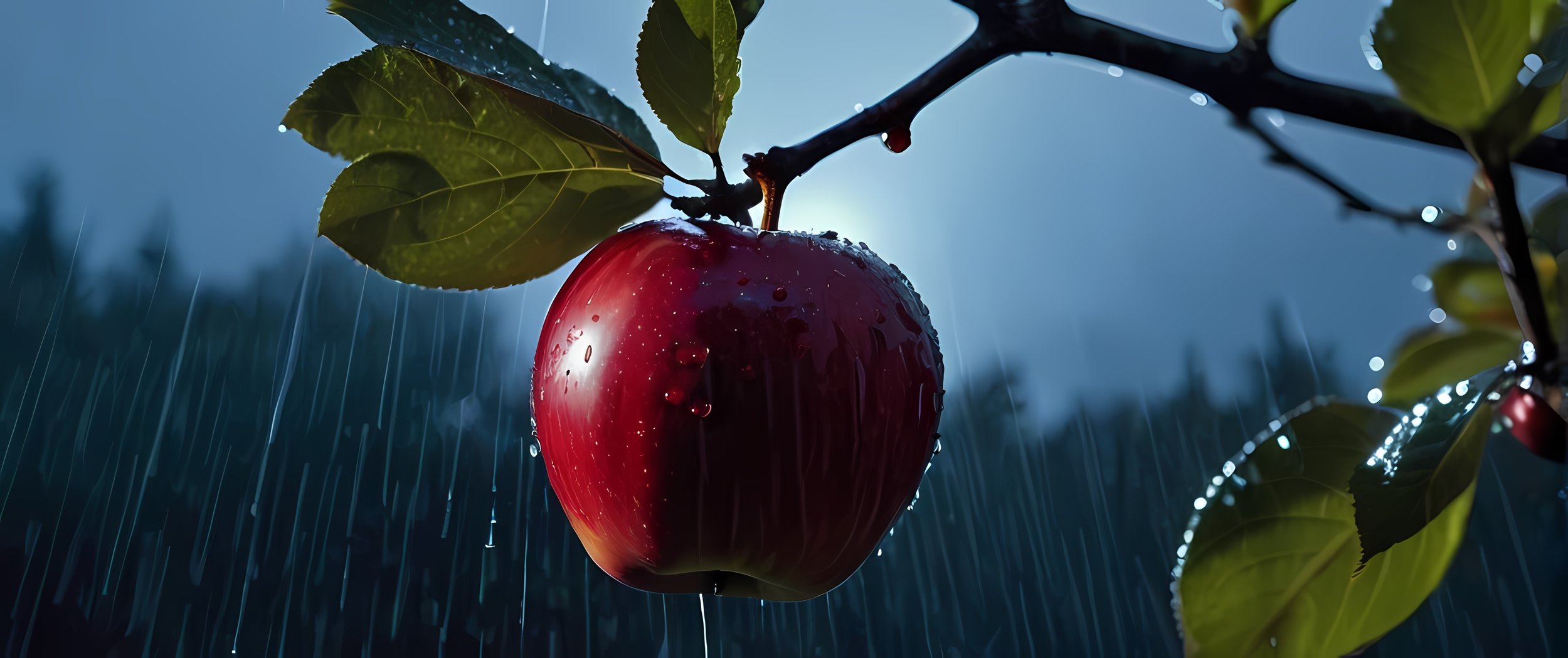
Harvesting a fruit takes work as well. Apples, lemons, grapes and oranges don’t jump off trees. They grow on limbs—and must be pursued to be enjoyed. Harvesting fruit involves risk. The best opportunities and the choicest blessings are rarely within reach. They are usually out somewhere hanging on a limb. Securing them will always require some kind of climb. Achieving them will always require some kind of risk. You cannot eliminate risk from your life and expect to be blessed. That sign forced me to remember that summertime is not merely about enjoying yourself. It is also about preparing yourself for the next season. And part of that preparation is asking yourself a simple, but profound question: what risks am I willing to take for the harvest that I desire?
I invite you to join me in thinking about that question this week. And as you do so, remember this haunting observation by Leo Buscaglia:
The person who risks nothing, does nothing, has nothing, is nothing, and becomes nothing. He may avoid suffering and sorrow, but he simply cannot learn, feel, change, grow or love. Chained by his certitude, he is a slave; he has forfeited his freedom. Only the person who risks is truly free.”