Making It With Masking Tape
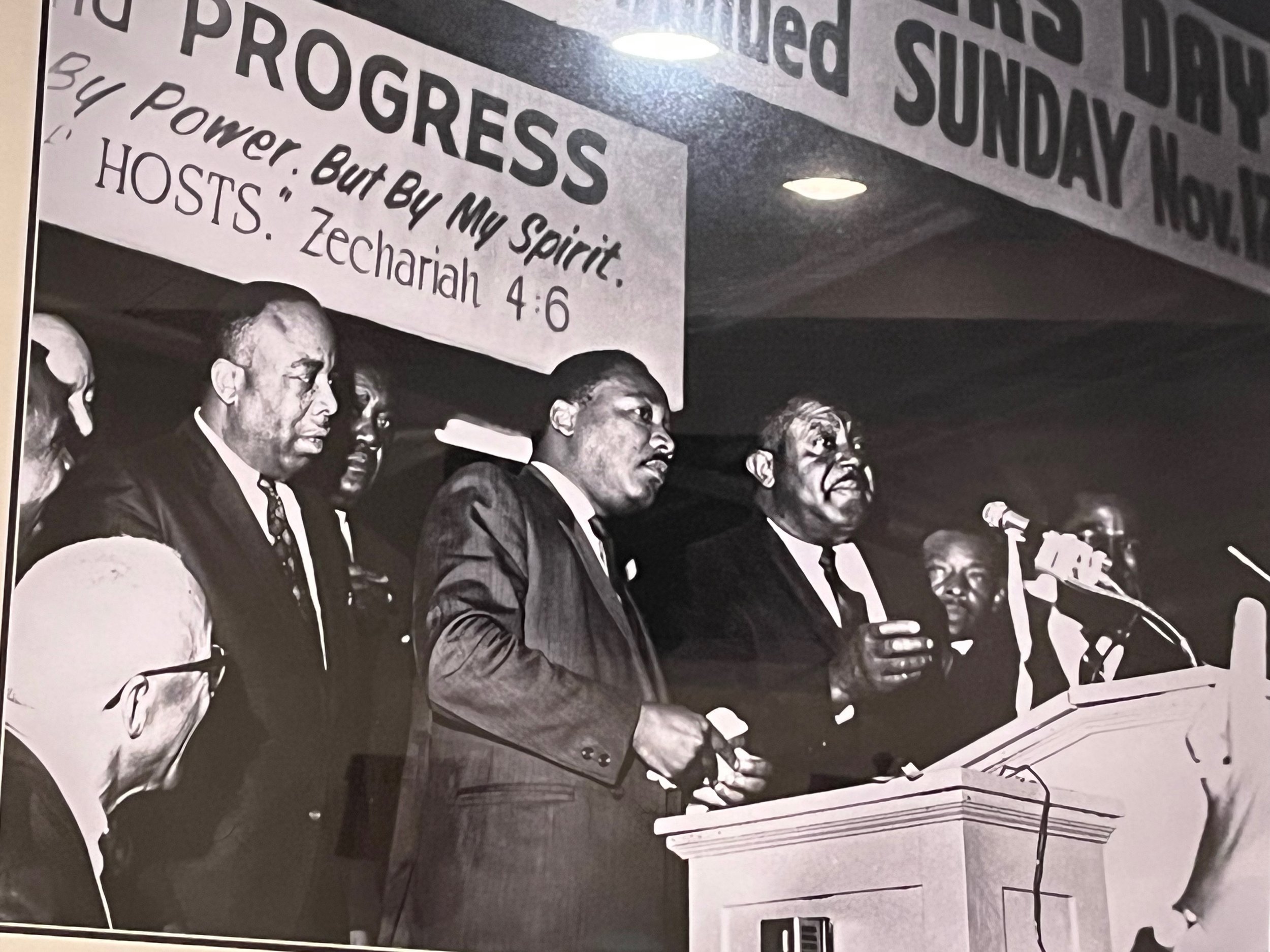
A few years ago while doing some research in Memphis, Tennessee, I decided to stop by Greater Community Temple Church of God in Christ. That church has been ably led by Bishop Brandon Porter for the past several decades. Bishop Porter is a nationally regarded religious leader who sits on the Presidium of the Church of God in Christ, and is known for his community activism, sharp wit, and infectious sense of humor. I have known Bishop Porter for years, and he was, as always, a gracious host.
After browsing Bishop Porter’s impressive library, I noticed a picture above his desk. He told me that the picture was taken immediately before Dr. Martin Luther King Jr.’s historic “I’ve Been To The Mountain Top” speech. It was the last speech of Dr. Kings’ life, and it was delivered on April 3, 1968 at Mason Temple Church of God in Christ, which is also in Memphis. There are three men prominently featured in the photograph: Rev. Ralph Abernathy (at the microphone), Dr. King (to his immediate left), and Bishop Porter’s father, Bishop W.L. Porter (to Dr. King’s left). Bishop Porter told me that in 1968 he was a young child and actually attended the service that night.
That picture hangs in his office as a reminder of his family’s legacy of service, and as an inspiration of what progressive and prophetic ministry looks like. The picture says everything you need to know about Martin Luther King Jr: on the last night of his life, he was in a church giving a message of hope to help Black sanitation workers fight against injustice.
I have looked at that picture more than a hundred times. But as I was scrolling through my phone last week looking at old pictures, I noticed something I had never seen. If you look closely at the photo, you will see what looks like masking tape holding the microphone together:
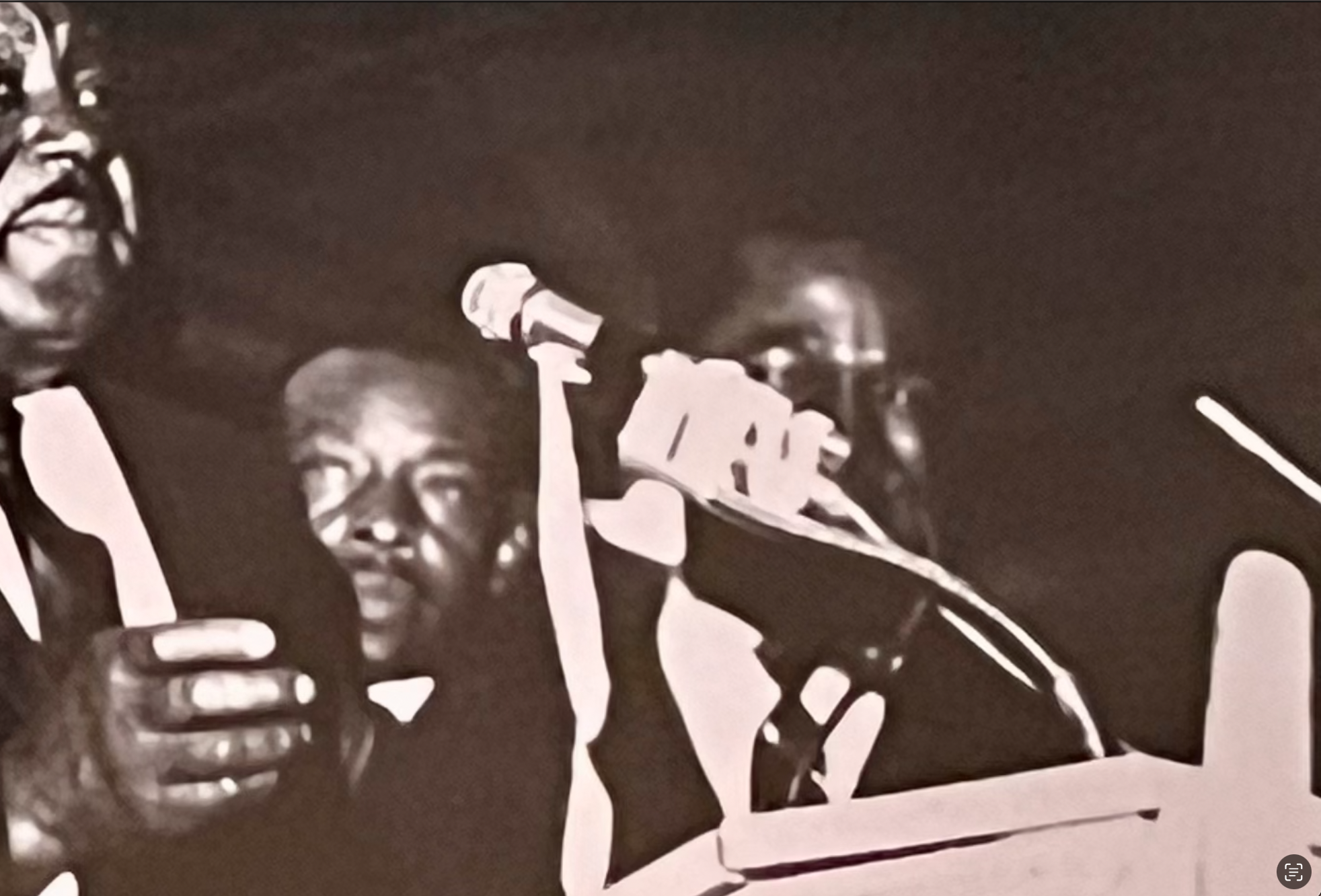
At first, I started laughing. A petty part of me even thought “well, that’s ghetto.” But then, a larger truth began to dawn on me. Even if it is masking task, who cares? That photo captures a moment that made history. No one knew in advance that when Dr. King gave that speech that night that it would be his last speech. I don’t know if the microphone holder was broken. But it really doesn’t matter. No one remembers the masking tape. All they remember is that on that night, a man made history and was ushered into a prophetic realm that few mortals ever visit. One of the lessons that we can learn from that photo is that nothing is ever going to be perfect. Sometimes, you have to make a move even though all you have is masking tape.
Masking tape was accidentally created in 1925 by a man named Richard Gurley Drew. It was originally designed to help auto painters “mask” or conceal defects after a vehicle was painted. These days, it is used to paint, craft, and to hold things together. Apparently, that’s what it was used for the night of Dr. King’s famous speech. Was there a more elegant solution? Most definitely. Was that option available? Probably not. If you look carefully at the photo, it even looks like some of tape came off! LOL. But who cares? Nobody remembers the masking tape. All they remember is that on that night, a man made history.
Here’s the lesson: stop waiting until you have everything together to move. Rarely are the data, conditions, or options perfect. Sometimes you have to make it with masking tape. Sometimes you have to use whatever is available to hold things together in order to survive.
This truth meets us in one of my favorite stories in all of scripture. Paul was onboard a ship headed to promulgate the gospel in Rome when the ship encountered a fierce storm. The storm battered and eventually destroyed the ship, although Jesus appeared to Paul in a vision and told him that everyone aboard the ship would survive. All 276 passengers aboard the ship did survive. But how they survived is worth noting. According to Acts 27:39-42, this is what happened:
And when it was day, they knew not the land: but they discovered a certain creek with a shore, into the which they were minded, if it were possible, to thrust in the ship. And when they had taken up the anchors, they committed themselves unto the sea, and loosed the rudder bands, and hoised up the mainsail to the wind, and made toward shore. And falling into a place where two seas met, they ran the ship aground; and the forepart stuck fast, and remained unmoveable, but the hinder part was broken with the violence of the waves.And the soldiers' counsel was to kill the prisoners, lest any of them should swim out, and escape. But the centurion, willing to save Paul, kept them from their purpose; and commanded that they which could swim should cast themselves first into the sea, and get to land: and the rest, some on boards, and some on broken pieces of the ship. And so it came to pass, that they escaped all safe to land.
Everybody survived the storm. Everyone made it safe to land. Some people swam. Others floated on boards. And still others made it on broken pieces. They had to use whatever was available to survive. So whether you have to use the broken pieces of a ship or a piece of masking tape, sometimes you have to do what I heard the old folks in the south say: you gotta make do.
But you can make history—even if you have to use masking tape to do it.