The Canary In The Coal Mine
Oil is one of the most significant raw materials on the planet. It is considered the “lifeblood” of the global economy, and is the primary energy source for one third of the global population. Without oil, planes would stop flying, cars would stop driving, and cruise ships would stop surging. Oil is used in more than 6,000 products. Without oil, there would be no lipstick, shampoo, detergent, deodorant, or toothpaste. Without oil, any of the clothes you wore this week that are made of polyester, nylon, spandex or acrylic would be nonexistent. So would your favorite pair of sneakers. Oil is so significant that history has been shaped by it, nations base their futures on it, companies pay billions to acquire it , and wars have to been fought to protect it.
But prior to the emergence of oil as the primary source of global energy more than 60 years ago, coal had that distinction. Whereas oil is a liquid, coal is a solid. Whereas oil is comprised of sea-based microorganisms , coal is made of decayed plants. And whereas oil must be drilled, coal must be mined. To extract coal from inside the belly of the earth, deep underground mines are dug, sometimes extending thousands of feet. Although drilling for oil is not risk-free, mining for coal is considered a much more dangerous pursuit. As an occupation, coal mining consistently ranks as one of the most dangerous in the world.
Part of the danger of coal mining stems from the absence of oxygen as your penetrate deeper into the earths’s surface. The further underground you travel, the lack of ventilation poses severe risk, due to increased temperature, humidity and the presence of deadly gases such as carbon monoxide, methane, and radon.
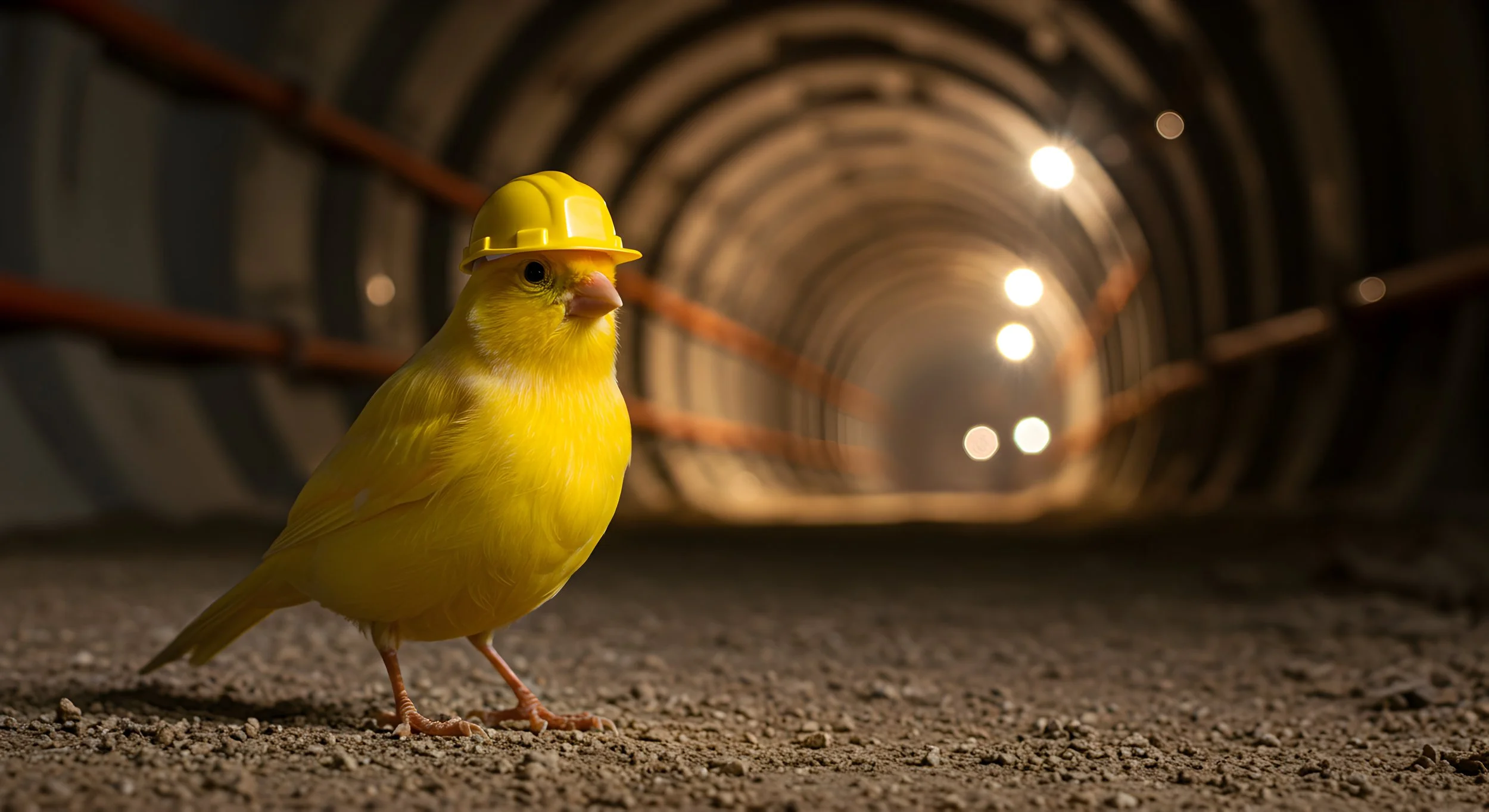
To avert these dangers, a Scottish scientist named John Haldane devised a simple test to determine how safe it was to enter a particular coal mine. The test did not require sophisticated technology. All the test required was that coal miners bring a canary with them into the mine.
As one writer put it “Canaries are good early detectors of carbon monoxide because they need immense quantities of oxygen to fly. Their anatomy allows them to get a dose of oxygen when they inhale and another when they exhale, by holding air in extra sacs. In other words, they get a double dose of air and any poisons the air might contain. When affected by poisonous gasses, canaries would often stop singing or fall off their perches, often unconscious. This warned the miners to evacuate.”
The experiment was so successful that it turned into a proverb. The maxim of a “canary in the coal mine” came to represent anything that gave you an early indication that you were in a dangerous environment and needed to evacuate. When the canary stopped singing, that was a sign to abort.
Although Mr. Haldane may have been the first person to devise the test of putting a canary a coal mine, he was not the first to understand the principle of early detection. God always gives us canaries in coal mines. He always gives us advance warning of people, situations, and decisions that are dangerous to our future and toxic for our well-being.
One of the best examples of this is found in the memoirs of the prophet Daniel. It tells the tragic tale of a King named Belshazzarr. During my childhood, I had a caramel covered book that featured illustrated pictures of Bible stories. This story was one of my favorites. The King decided to host an extravagant party. At the height of the festivities, the fingers of a man’s hand appeared and began to write a cryptic message on the wall. King Belshazzarr was troubled by the writing on the wall. No one at the party could interpret the message, so his mother advised him to summon the prophet Daniel. When Daniel arrived, he interpreted the message for the King. The interpretation was a scathing indictment of Belshazzar’s father, and the terrible decisions that he had made. According to Daniel 5:22, he then turned to Belshazzar and said:
You are his successor, O Belshazzar, and you knew all this, yet you have not humbled yourself.”
Belshazzar’s father was his canary in the coal mine. He watched his father make a slew of mistakes—all to no avail. He had a perfect example of what not to do, but he ignored it. He repeated every mistake his father made. Consequently, he met the same fate. He ignored the warning signs. He didn’t notice when the canary stopped singing.
So here are today’s questions: what early warning signs are you ignoring? What canaries in your life have stopped singing?
Please do me a favor: pay attention. God might be trying to save your life.